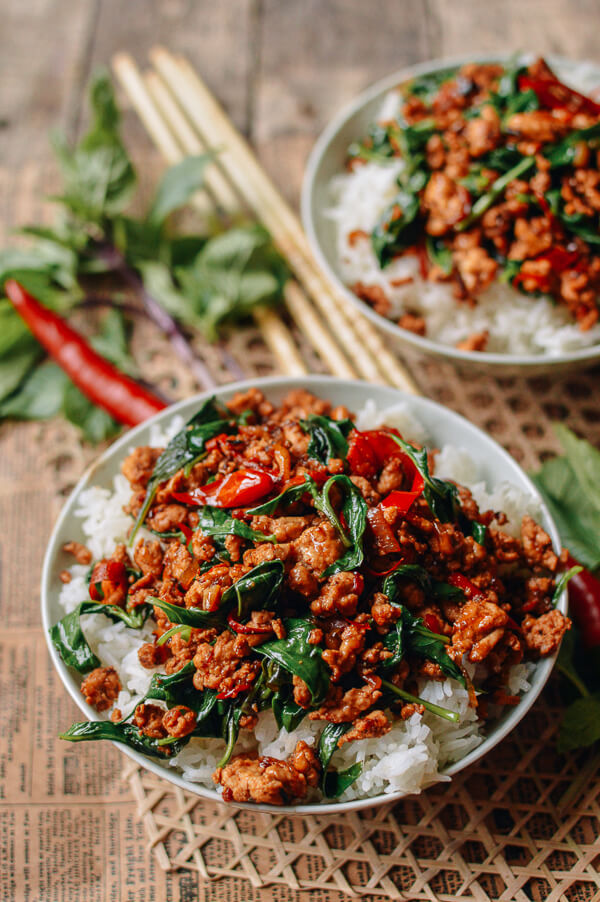
Thai Holy Brazil stir fry (Pad Gra Pow)

gg


Pad Gra Pow video recipe

Ingredients
  • 3 to 4 tablespoons oil
  • 3 Thai bird or holland chilies, de-seeded (if desired) and thinly sliced
  • 3 shallots, thinly sliced
  • 5 cloves garlic, sliced
  • 1 pound ground chicken
  • 2 teaspoons sugar or honey
  • 2 tablespoons soy sauce
  • 1 tablespoon fish sauce
  • ⅓ cup low sodium chicken broth or
Instructions
  1. In a wok over high heat, add the oil, chilies, shallots and garlic, and fry for 1-2 minutes. Add the ground chicken and stir-fry for 2 minutes, breaking up the chicken into small bits.
  2. Add the sugar, soy sauce, and fish sauce. Stir-fry for another minute and deglaze the pan with the broth. Because your pan is over high heat, the liquid should cook off very quickly. Add the basil, and stir-fry until wilted. Serve over rice.

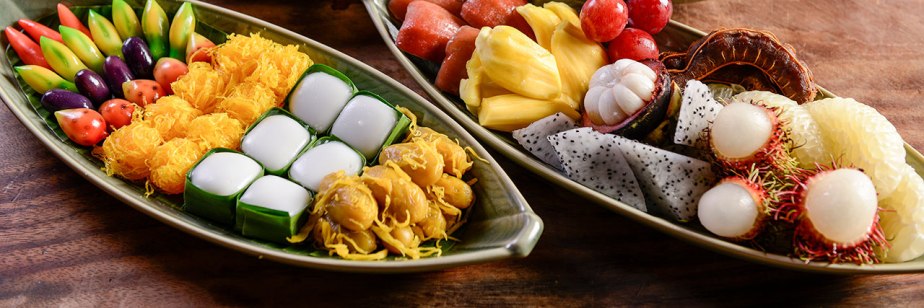
Thai desserts

For a delicious Thai dessert recipe, look no further than this fantastic list of Thai desserts! Asian desserts are naturally low in fat and calories while remaining high in flavor, texture, and taste. Many of these Thai desserts are also lactose and gluten free, so perfect for those with special diet requirements. Looking for an easy dessert recipe? You’ll find a variety of easy desserts here that you can whip up in no time. Enjoy one of these colorful and flavorful Thai desserts tonight!

The history of Thai food

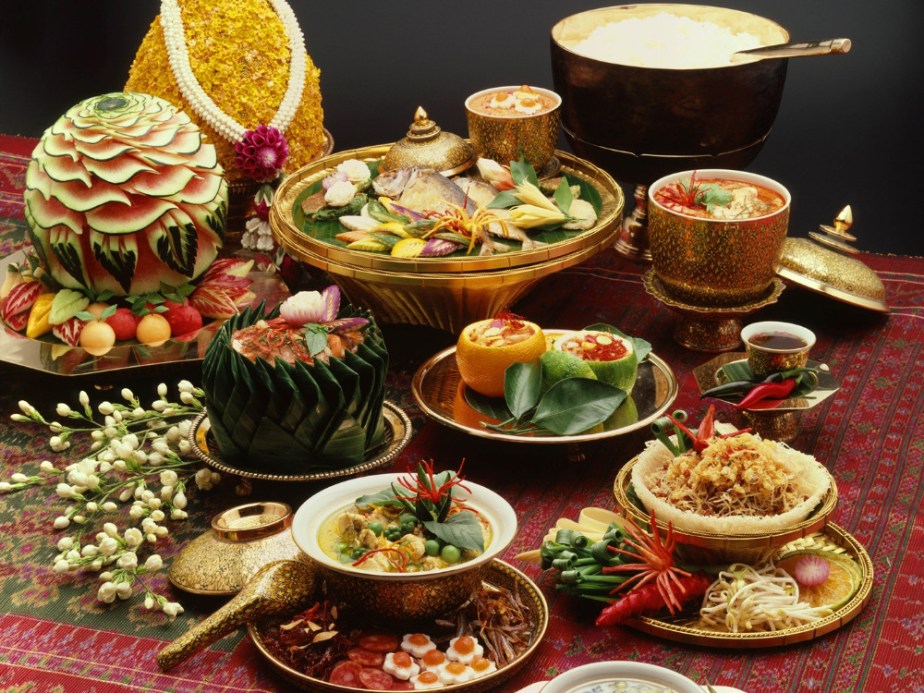
Thai food is internationally famous. Whether chilli-hot or comparatively bland, harmony is the guiding principle behind each dish. Thai cuisine is essentially a marriage of centuries-old Eastern and Western influences harmoniously combined into something uniquely Thai. Characteristics of Thai food depend on who cooks it, for whom it is cooked, for what occasion, and where it is cooked. Dishes can be refined and adjusted to suit all palates.
img_0871

Originally, Thai cooking reflected the characteristics of a waterborne lifestyle. Aquatic animals, plant and herbs were major ingredients. Large chunks of meat were eschewed. Subsequent influences introduced the use of sizeable chunks to Thai cooking. With their Buddhist background, Thais shunned the use of large animals in big chunks. Big cuts of meat were shredded and laced with herbs and spices. Traditional Thai cooking methods were stewing and baking, or grilling. Chinese influences saw the introduction of frying, stir-frying and deep-frying. Culinary influences from the 17th century onwards included Portuguese, Dutch, French and Japanese. Chillies were introduced to Thai cooking during the late 1600s by Portuguese missionaries who had acquired a taste for them while serving in South America. Thais were very adapt at “Siameseising” foreign cooking methods, and substituting ingredients. The ghee used in Indian cooking was replaced by coconut oil, and coconut milk substituted for other dairy products.

Overpowering pure spices were toned down and enhanced by fresh herbs such as lemon grass and galanga. Eventually, fewer and less spices were used in Thai curries, while the use of fresh herbs increased. It is generally acknowledged that Thai curries burn intensely, but briefly, whereas other curries, with strong spices, burn for longer periods. Instead of serving dishes in courses, a Thai meal is served all at once, permitting diners to enjoy complementory combinations of different tasters.

A proper Thai meal should consist of a soup, a curry dish with condiments, a dip with accompanying fish and vegetables. A spiced salad may replace the curry dish. The soup can also be spicy, but the curry should be replaced by a non-spiced item. There must be harmony of tastes and textures within individual dishes and the entire meal.
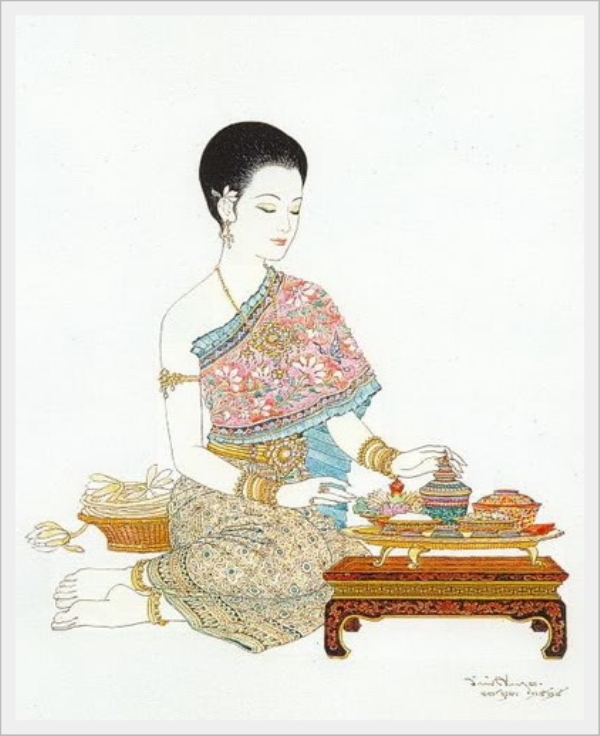
 

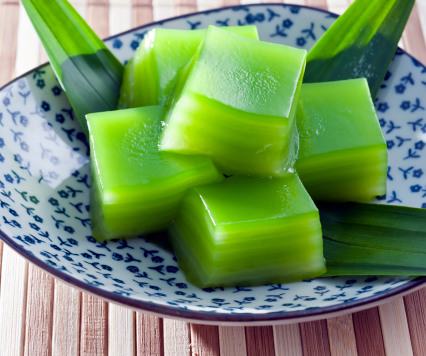
Steamed Layered Coconut Cake (Kanom Chun)

Coconut milk imparts a rich oiliness to the layers, so a few pieces go a long way. The aroma and taste, a fragrant perfume of sweet jasmine and nutty pandan, is as unique as the stodgy texture of this dessert. When you pull the cake from the tray after it’s cooled, don’t worry about being too delicate as the thick sheet of khanom chan will handle a bit of stretch and pull without tearing. If you don’t have a 10 x 10 inch tray, use any heatproof square or rectangular tray-like container.

Ingredients

  • One 400 millilitre tin coconut milk (NOT reduced fat)
  • 250 grams white sugar
  • 100 grams arrowroot flour
  • 40 grams tapioca flour
  • 30 grams non-glutinous rice flour
  • Pinch of salt
  • 200 millilitres jasmine water (made by steeping a few jasmine flowers – dried are fine – in water overnight OR with a few drops of jasmine essence)
  • 3-4 pandan leaves, chopped into ¼ inch pieces OR a combination of pandanus extract and green food dye
  • Food colouring (optional)

Directions/Method

  1. Combine the coconut milk and sugar in a saucepan. Cook on medium heat just until the sugar is dissolved, avoiding bringing the liquid to the boil. Set aside until completely cool.
  2. Add plenty of water to the base of your steamer (recommended: a tiered metal Chinese steamer) and heat to a slow steady boil. Place a 10 x 10 inch tray onto a tier in your steamer and leave for 20 minutes to until very hot.
  3. Mix the flours and salt together in a bowl. Whisk the cooled sweetened coconut milk into the bowl, ensuring there are no lumps by straining the mix through a fine mesh sieve. Evenly divide the mixture into two portions.
  4. Make the pandan water by blending half of the jasmine water with the pandan leaves. Strain the pandan water into one half of the divided coconut mix with a fervour, pressing with as much effort as you can muster to extract all of the liquid (and flavour). Add the remaining 100 millilitres of jasmine water to the other half of the coconut mixture.
  5. Pour a very thin layer of either mix into the tray, aiming for just a couple or 3 millimetres in thickness (around ⅓ cup per layer in a 10×10 tray). Tip the steamer slightly, if necessary, so that the dough evenly covers the bottom of the tray. Steam for 12-15 minutes, during which time the layer will set and will appear dry with an even opaque look. Carefully remove the lid, wiping it with a tea towel to keep water from dripping onto the cake (if using a Chinese steamer with a domed lid).
  6. Add the second layer, again with the same minimal thickness, and steam for a further 12-15 minutes. Repeat, alternating white and green layers, until you have used all of the slurry. Remember to top up the steaming water if it gets low and to always wipe the lid each time you remove it. After adding the final layer, steam for 20-25 minutes to set.
  7. Set aside to cool completely before cutting and serving. Khanom chan is best on the day it’s made, but will last a few more at a stretch and about a week in the fridge (although the texture may become slightly less chewy.

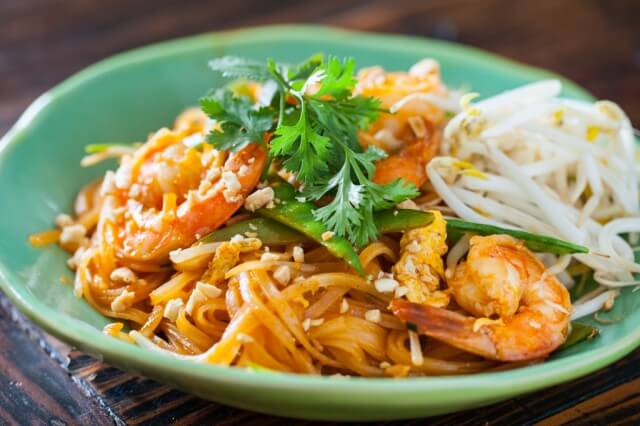
Pad Thai

Pad Thai video recipe

  • 4 ounces fettuccine-width rice stick noodles
  • ¼ cup peanut oil
  • 1 to 4 tablespoons tamarind paste
  • ¼ cup fish sauce (nam pla)
  •  cup honey
  • 2 tablespoons rice vinegar
  • ½ teaspoon red pepper flakes, or to taste
  • ¼ cup chopped scallions
  • 1 garlic clove, minced
  • 2 eggs
  • 1 small head Napa cabbage, shredded (about 4 cups)
  • 1 cup mung bean sprouts
  • ½ pound peeled shrimp, pressed tofu or a combination
  • ½ cup roasted peanuts, chopped
  • ¼ cup chopped fresh cilantro
  • 2 limes, quartered

PREPARATION

  1. Put noodles in a large bowl and add boiling water to cover. Let sit until noodles are just tender; check every 5 minutes or so to make sure they do not get too soft. Drain, drizzle with one tablespoon peanut oil to keep from sticking and set aside. Meanwhile, put 1 tablespoon tamarind paste, fish sauce, honey and vinegar in a small saucepan over medium-low heat and bring just to a simmer. Taste and add more tamarind paste if desired. It should be piquant, but not unpleasantly sour. Stir in red pepper flakes and set aside.
  2. Put remaining 3 tablespoons oil in a large skillet over medium-high heat; when oil shimmers, add scallions and garlic and cook for about a minute. Add eggs to pan; once they begin to set, scramble them until just done. Add cabbage and bean sprouts and continue to cook until cabbage begins to wilt, then add shrimp or tofu (or both).
  3. When shrimp begin to turn pink and tofu begins to brown, add drained noodles to pan along with sauce. Toss everything together to coat with tamarind sauce and combine well. When noodles are warmed through, serve, sprinkling each dish with peanuts and garnishing with cilantro and lime wedges.